International Seminar on Adhunika Sahithya Prakriyalu Samajika Prayojanalu - September 30, 2026
Date: September 30, 2026
Duration:
1 day(s)
Venue:
Offline: Seminar Hall, Online: Google Meet
Target:
250
Number of Participants:
300
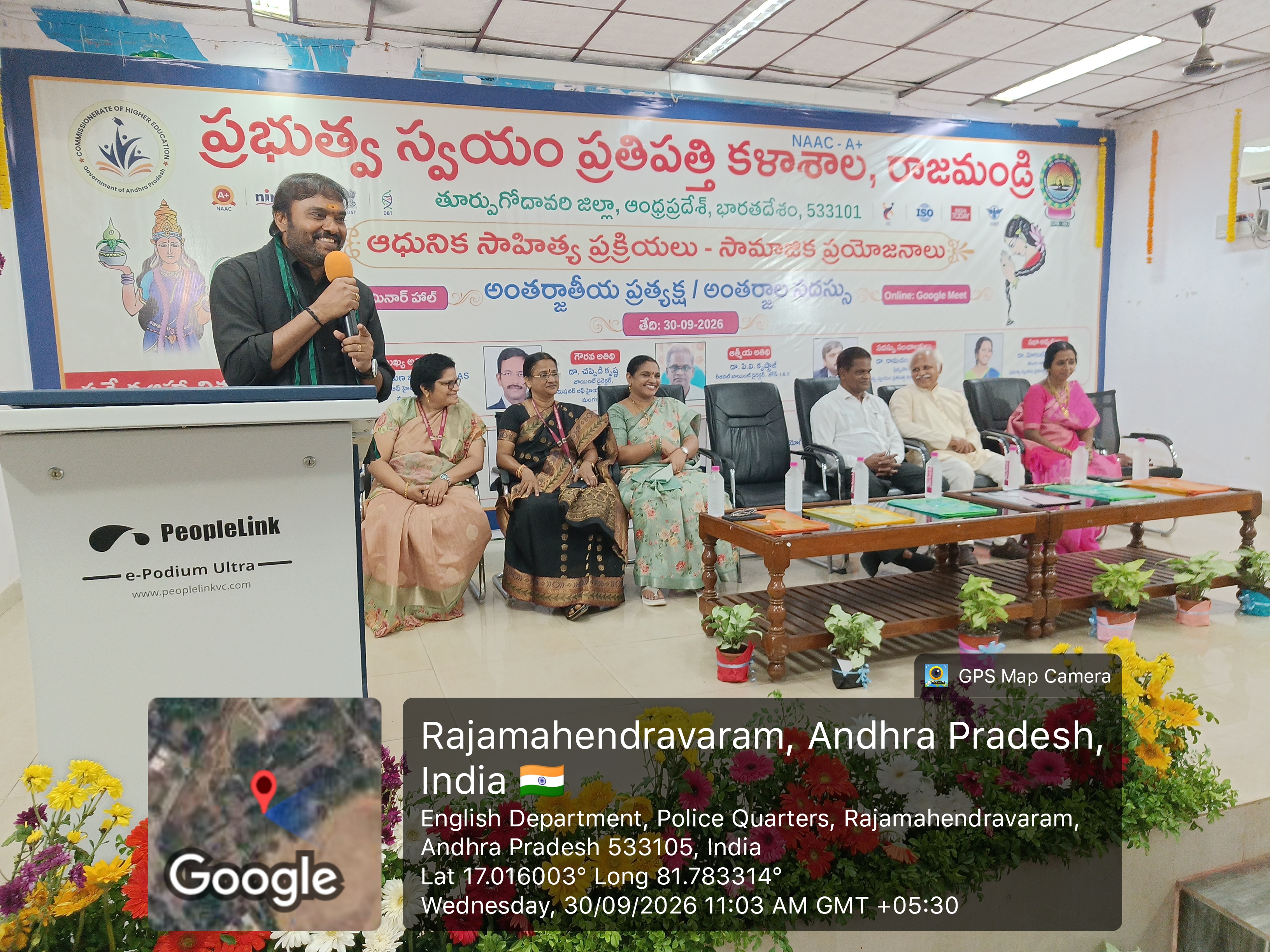
An International Conference on “Modern Literary Genres – Social Benefits” was organized by the Department of Telugu, Government College (Autonomous), Rajamahendravaram, on 30 September 2026. The conference aimed to explore the evolution of modern literary genres in Telugu literature, examine their social relevance, and highlight the role of literature in addressing contemporary social issues.
The conference provided an academic platform for eminent litterateurs, professors, researchers, and scholars from India and abroad to exchange their ideas and research findings. The deliberations focused on the relationship between literature and society, the development of social consciousness through literary expression, and the contribution of modern literary forms to the promotion of human values and social transformation.
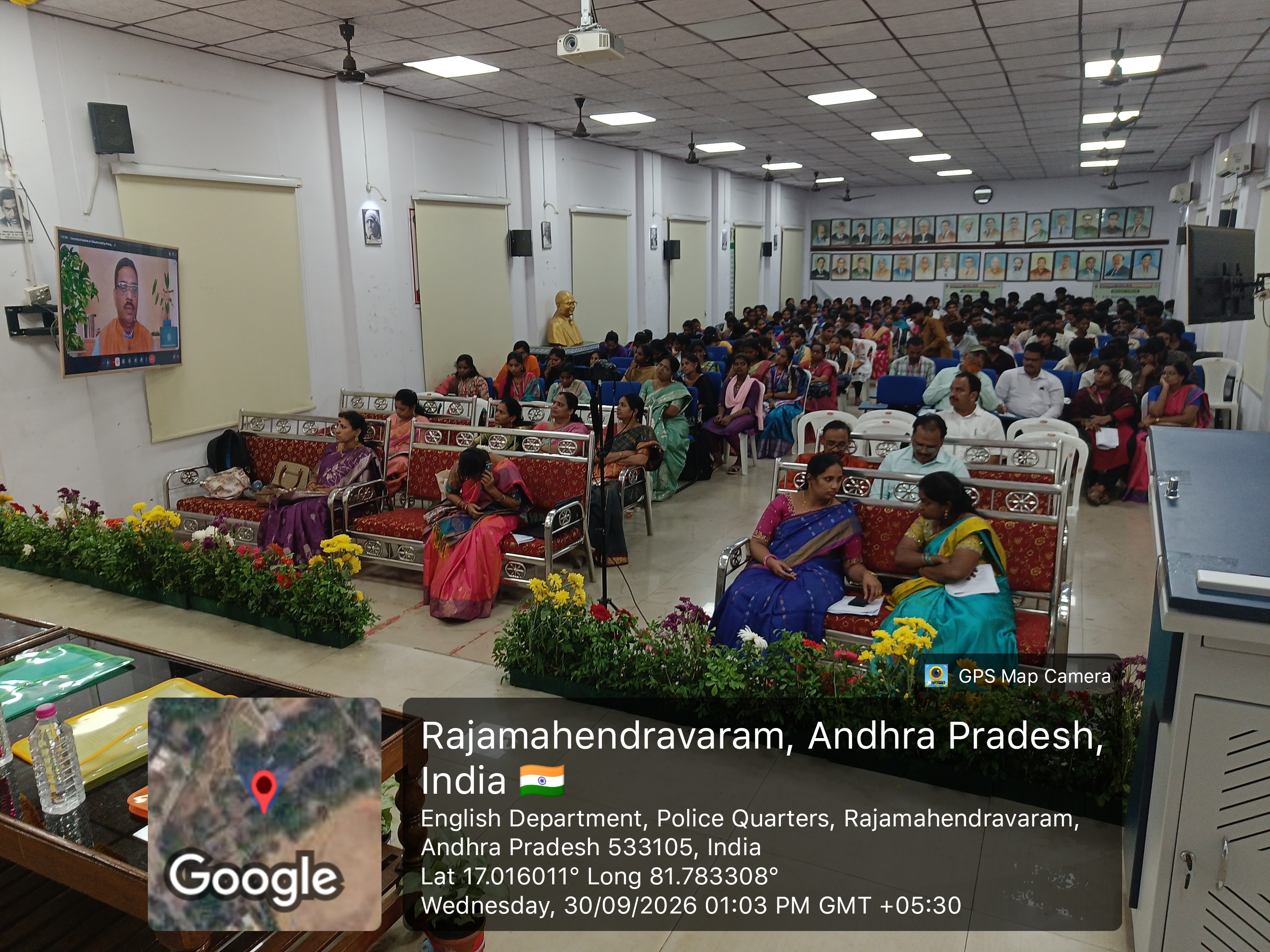
The programme was conducted in a hybrid mode, combining in-person participation at the college seminar hall with online presentations through Google Meet. This arrangement enabled scholars from different regions and countries to participate and share their research perspectives.
Dr. P. V. Krishnaji, Regional Joint Director, Rajamahendravaram, attended the conference as the Chief Guest, while Dr. Ramachandra R. K., Principal of the college, presided over the programme. Dr. Moganti Sudhamayi, Lecturer-in-Charge of the Department of Telugu, coordinated the programme.
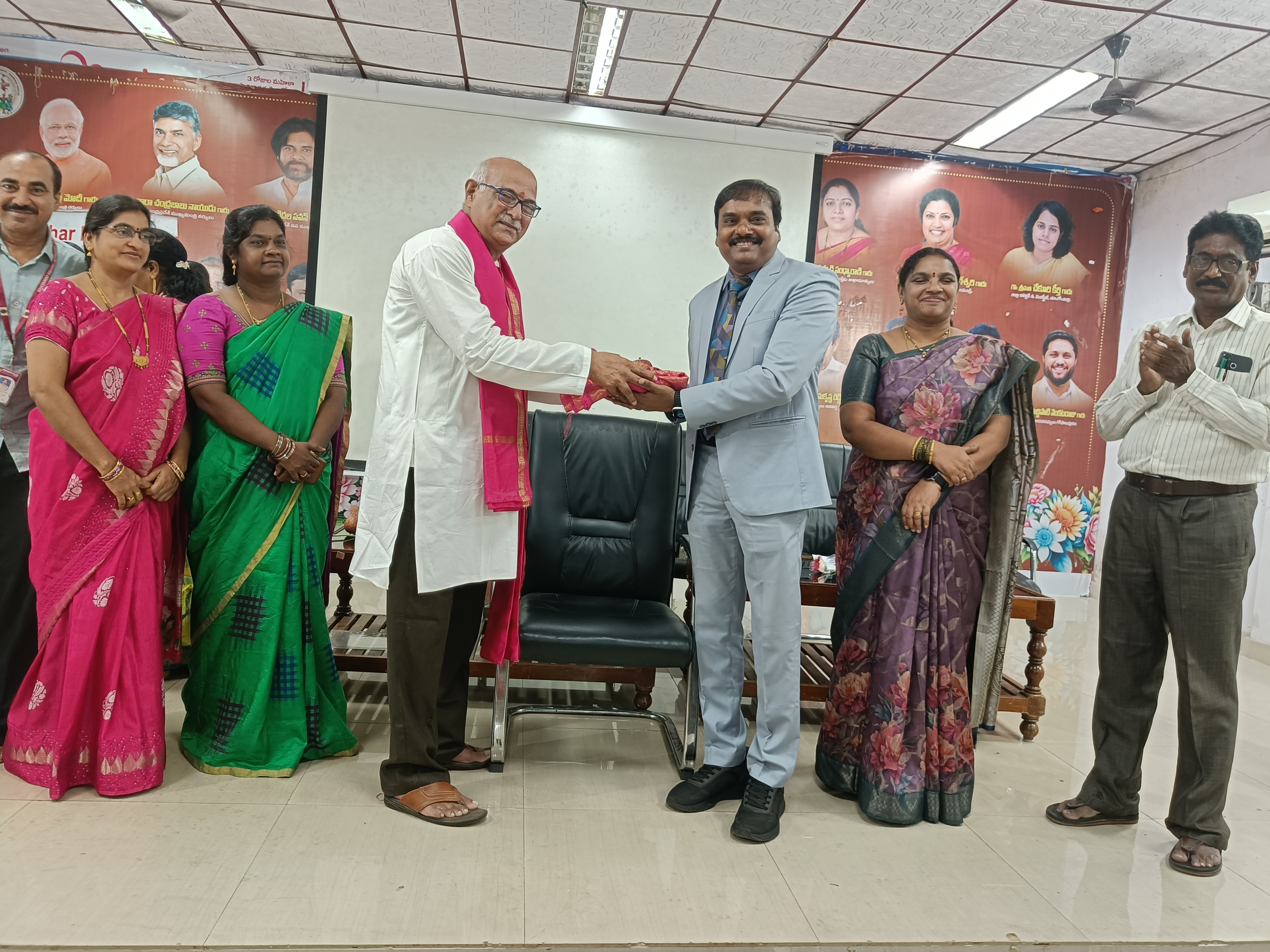
A major highlight of the conference was the release of a special issue of the international research journal Sahitya Tarangini, containing 163 research papers. The publication on the day of the conference marked a significant contribution to Telugu literary scholarship.
Organizer(s):
Department of Telugu
Outcome:
The international conference achieved several important academic outcomes:
1. Enhanced literary understanding: The conference deepened participants’ understanding of modern literary genres and their changing forms.
2. Recognition of social relevance: The discussions highlighted the capacity of literature to address social issues and promote positive change.
3. Research dissemination: The presentations provided scholars with an opportunity to share their research findings with a wider academic audience.
4. International academic interaction: Participation by scholars from India and abroad encouraged the exchange of ideas and research perspectives.
5. Publication of research: The release of a special issue of Sahitya Tarangini, containing 163 research papers, created an important scholarly resource.
6. Promotion of research culture: The conference encouraged research-oriented thinking among teachers, researchers, and students.
7. Strengthening academic collaboration: The event helped build connections among scholars and educational institutions.
8. Awareness of literature’s social role: The deliberations reinforced the importance of literary expression in fostering social consciousness, human values, and cultural understanding.
9. Effective use of digital platforms: The hybrid format demonstrated the value of online technology in expanding access to academic conferences.
10. Encouragement for future research: The conference inspired further studies on contemporary Telugu literature, literary movements, and their social implications.