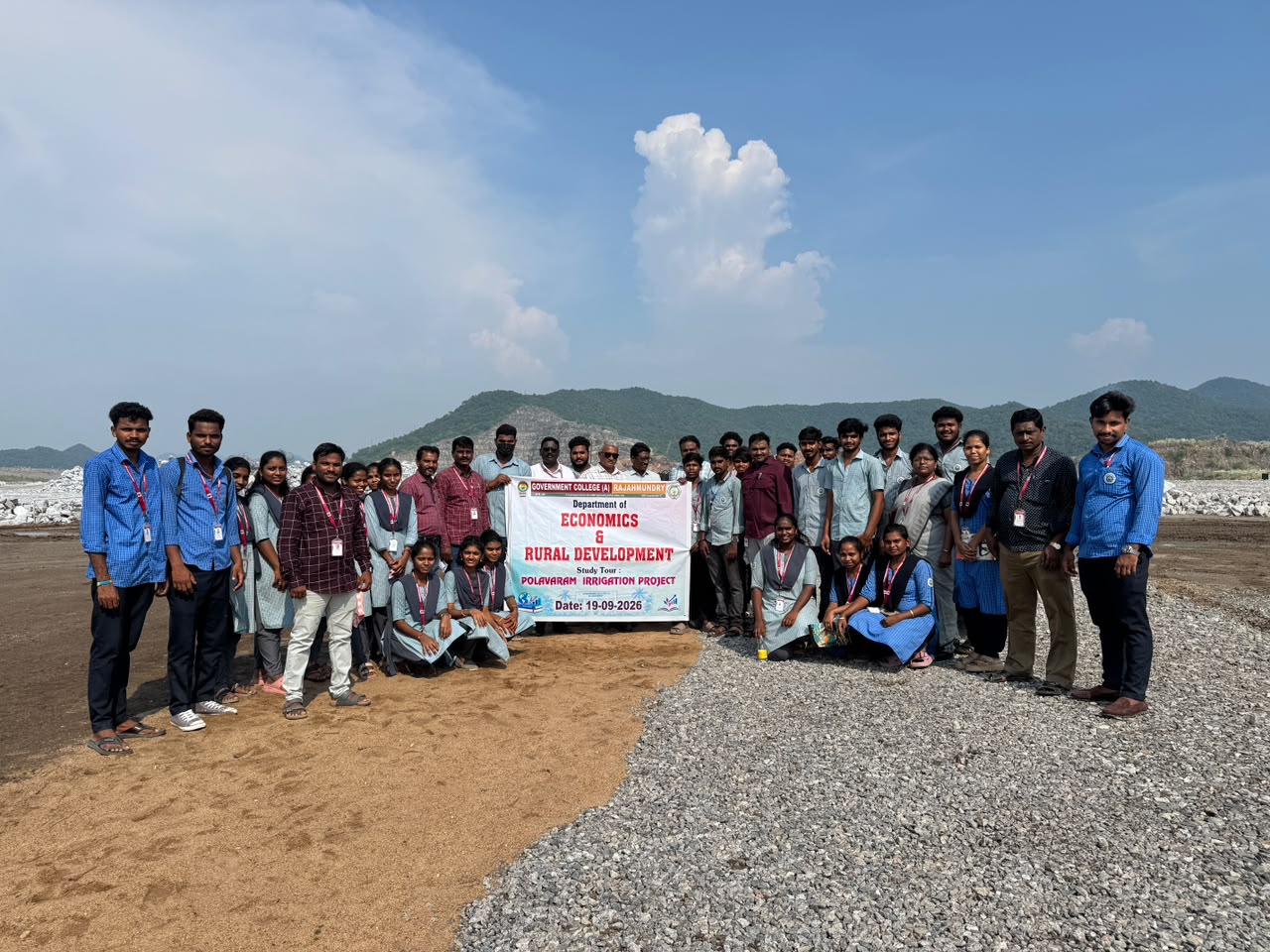
EDUCATIONAL FIELD VISIT POLAVARAM IRRIGATION PROJECT - September 19, 2026
Date: September 19, 2026
Duration:
1 day(s)
Venue:
POLAVARAM
Target:
III YEAR RURAL DEVELOPMENT STUDENTS
Number of Participants:
33
1. Basic Details of the Activity
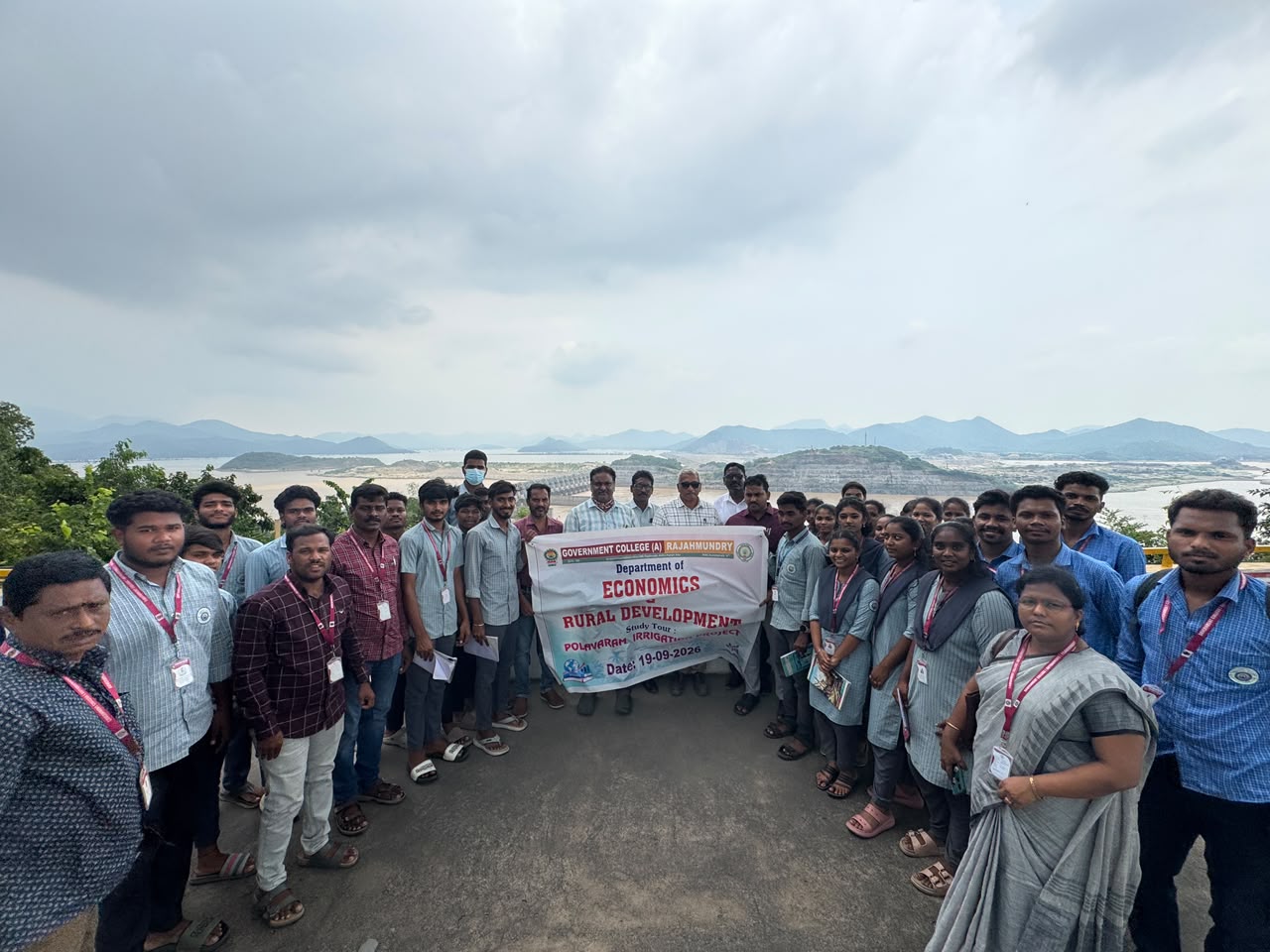
Title of Activity Educational Field Visit (Study Tour) to Polavaram Irrigation Project Head Works
Organised by Department of Economics, Government College (Autonomous), Rajahmundry
Date of Visit 19 September 2026 (one-day visit)
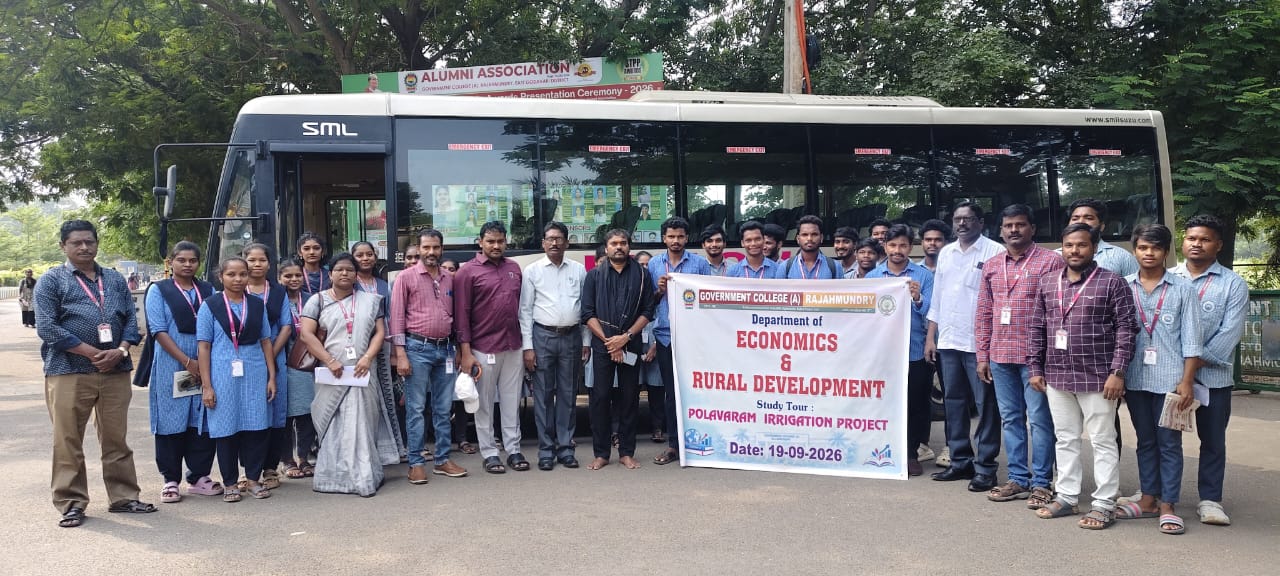
Participants 33 final-year students of Economics and 7 faculty members (total 40)
Convened by Dr. Rajana Balayya, Head of the Department of Economics
Organizer(s):
DEPARTMENT OF ECONOMICS
Outcome:
Outcomes of the Visit
• Experiential learning: students saw irrigation infrastructure, hydro-power and flood-control components that are otherwise
studied only through textbooks.
• Application of economic concepts: the visit gave practical context for cost-benefit analysis, public investment, agricultural
productivity, water as an economic resource, and the social cost of displacement.
• Awareness of engineering and project management: students understood the scale, phased execution and coordination
across several work packages.
• Safety and discipline: the group followed the conditions laid down by the Water Resources Department and carried identity
cards throughout.
• Academic follow-up: students are encouraged to prepare short reports and presentations and to use the observations in project
work, seminars and viva-voce.
• Institutional benefit: the visit strengthens the College's linkage with a government department and supports the experiential
learning and field-based activities documented for NAAC.
Feedback:
• Students said the visit helped them connect irrigation, agriculture and regional development topics with a real project.
• They appreciated the clear explanations by the engineers and the chance to ask questions at the site.
• They were satisfied with the HI-GLOW bus arrangement and the overall organisation of the day.
• They found the safety instructions near heavy machinery clear and easy to follow.
• They suggested more time at each location and similar visits to other development projects every year.